
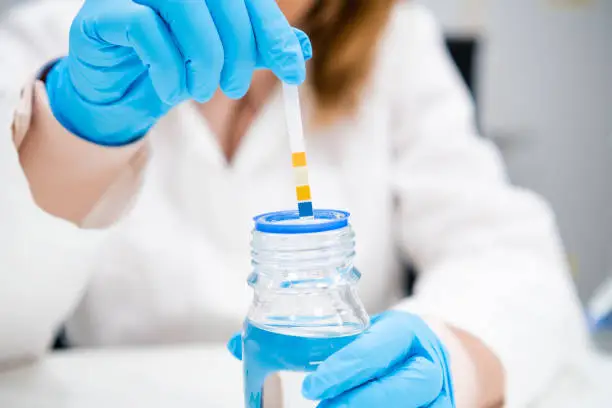
Many homeowners can sense when something is not quite right with their water long before they can explain it.
It might be a metallic taste in the morning, a slight brown tint after the tap runs, an unusual odor in the bathroom, or simply a growing concern about what is actually being consumed every day.
At that point, the question is no longer “Is something wrong?” but rather “What exactly is going on?”
That is where professional water testing becomes important—not as a reaction to fear, but as a way to replace uncertainty with measurable information.
Why Water Concerns Often Start With Small Signs
Most water issues do not begin with dramatic changes. They start subtly:
- A slight change in taste
- Occasional discoloration
- Light staining on fixtures
- Water that looks different at certain times
These signs are easy to dismiss individually, but together they often indicate that something in the system has changed.
The challenge is that appearance alone cannot explain the cause.
Why Guesswork Is Not a Reliable Strategy
Homeowners often try to interpret water issues using common assumptions:
- “It’s just old pipes”
- “It’s probably temporary”
- “It must be from the city supply”
- “It doesn’t happen all the time, so it’s fine”
While these explanations may sometimes be correct, they are not verified answers.
Without testing, it is impossible to know whether:
- The issue is localized or system-wide
- It is temporary or recurring
- It is cosmetic or chemically significant
- It requires action or monitoring
What Professional Water Testing Actually Does
Professional water testing replaces assumptions with data.
A structured approach may include:
- Metals such as lead, copper, and iron
- Microbiological indicators like bacteria
- Chemical contaminants including PFAS
- General water quality and potability indicators
- Corrosion-related conditions affecting plumbing
This combination provides a more complete view of what is happening inside the system.
A properly designed scope from a qualified provider offering laboratory services ensures that testing is not limited to a single concern.
Why One Test Is Not One Question
Water systems are complex, and a single test rarely answers everything.
For example:
- Lead results may relate to plumbing materials and corrosion
- Iron may reflect system disturbance or pipe conditions
- Bacteria may indicate stagnation or usage patterns
- PFAS may come from broader environmental sources
Each result adds a piece to a larger puzzle.
Why Scope Design Matters Before Testing Begins
A strong testing program starts before any sample is collected.
Key decisions include:
- Which contaminants should be included
- Which fixtures should be tested
- How many sampling points are needed
- What the homeowner is actually trying to understand
Without proper scope design, results may be incomplete or misleading.
Why Different Homes Need Different Testing Approaches
No two homes are identical. Differences may include:
- Plumbing age and materials
- Renovation history
- Fixture usage patterns
- Water source and infrastructure
- Building layout and design
This is why testing must be tailored rather than standardized.
Why Certified Analysis Matters
Certified water testing provides:
- Verified laboratory results
- Structured interpretation of findings
- Consistency in measurement methods
- Traceable and reliable data
Understanding different testing methods helps explain why professional analysis is more dependable than informal checks.
Why Common Contaminants Require Structured Evaluation
Water concerns often involve multiple categories, including:
- Lead and other metals
- Bacteria and microbial indicators
- PFAS and synthetic compounds
- General potability factors
- Corrosion-related conditions
A broader approach ensures that no single concern is evaluated in isolation.
More details about these are often covered under contaminants tested, which helps homeowners understand what can actually be measured.
Why Appearance Alone Can Be Misleading
Water can look:
- Clear but still contain contaminants
- Slightly discolored due to harmless conditions
- Normal at one time and different at another
This inconsistency is why visual inspection cannot be used as a final decision-making tool.
Why Water Issues Often Change Over Time
Water conditions are not always static.
They can change due to:
- Plumbing usage patterns
- Seasonal variations
- Maintenance or repairs
- Changes in flow or stagnation
This makes repeated observation without testing even more confusing.
Why Professional Testing Is About Clarity, Not Alarm
The goal of water testing is not to create concern—it is to provide clarity.
It helps answer:
- What is actually in the water
- Whether anything requires attention
- How different factors relate to each other
- What steps, if any, should follow
Why Location and Infrastructure Matter
Water quality is influenced by local infrastructure and delivery systems. That is why testing services often vary by region.
Checking available locations helps ensure the service is relevant to the homeowner’s area and water system conditions.
Why Water Quality Problems Need Context
A single result does not define the entire system. Water quality is shaped by:
- Plumbing conditions
- Environmental factors
- Usage patterns
- System design and age
Understanding broader water quality problems helps place individual findings into context.
Why Homeowners Should Not Wait for a Major Issue
Many people delay testing until a visible or serious problem appears. But water issues often develop gradually.
Testing earlier can help:
- Identify conditions before they escalate
- Establish a baseline for future comparison
- Reduce uncertainty about daily water use
- Support better long-term decisions
Why Professional Guidance Improves Interpretation
Even accurate lab results need explanation.
Professional interpretation helps homeowners understand:
- What each result means in practical terms
- Whether findings are connected
- If action is needed or not
- How to prioritize concerns
Without interpretation, data alone can feel overwhelming.
When Professional Water Testing Makes Sense
Testing is especially useful when:
- Water taste, smell, or appearance changes
- There are concerns about lead or bacteria
- A home is older or recently renovated
- Plumbing conditions are unknown
- Peace of mind is needed about daily water use
Final Thoughts
Professional water testing is not about reacting to fear—it is about replacing uncertainty with clarity.
Most homeowners do not need to interpret chemistry or plumbing systems on their own. They need reliable answers based on real analysis.
A well-designed test does more than detect problems. It explains what is happening, how it may be connected, and whether it matters for everyday use.
Because in the end, understanding your water is not about guessing—it is about knowing what is actually in it and what that means for your home.