
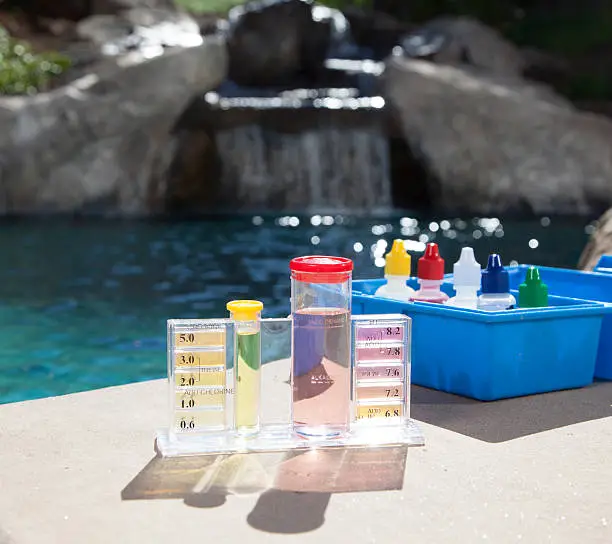
DIY water testing kits are often the first step families take when something about their water feels off. They are easy to buy, simple to use, and promise quick answers.
But water is more complex than what a basic kit can reliably capture.
As a result, many families eventually realize that while DIY kits can be a starting point, they often do not provide the level of clarity needed to understand what is actually happening in the water system.
That is why more households are shifting toward professional laboratory testing for meaningful, complete answers.
Why DIY Kits Feel Like an Easy Solution
DIY kits are appealing because they offer:
- Fast results
- Low cost
- Simple instructions
- Immediate access without scheduling
For a homeowner trying to make sense of a concern quickly, this convenience feels reassuring.
However, convenience does not always equal accuracy or completeness.
Where DIY Testing Starts to Fall Short
Most home kits are limited in what they can measure and how precisely they can measure it.
Common limitations include:
- Narrow contaminant coverage
- Less precise detection thresholds
- Limited ability to separate similar conditions
- No structured interpretation of results
This means a kit might show something, but not explain what it means.
Why Water Problems Are Rarely Single-Issue
One of the biggest misunderstandings is the idea that water issues come from a single cause.
In reality, household water can involve:
- Metals like lead and copper
- Bacteria or microbial indicators
- PFAS and other chemical compounds
- Corrosion-related plumbing conditions
- General water stability and potability factors
A DIY kit usually focuses on only one or two of these areas, leaving the rest unexamined.
Why Fixture-Level Confusion Happens
Even within a single home:
- One faucet may show different results than another
- Kitchen and bathroom lines may behave differently
- Stagnation levels may vary by location
- Plumbing materials may not be consistent throughout
Without proper sampling design, DIY testing can easily misrepresent the overall situation.
Why Sample Collection Matters More Than People Realize
Accurate water testing depends heavily on how the sample is taken.
Professional testing considers:
- First-draw vs flushed samples
- Fixture selection strategy
- Time of day and water usage patterns
- Plumbing layout and system design
DIY kits rarely control for these factors, which can affect results significantly.
Why Certified Laboratory Testing Is Different
A professional water testing lab provides more than just measurements. It offers structure.
A certified process typically includes:
- Controlled sample handling
- Standardized testing methods
- Quality assurance procedures
- Verified detection thresholds
- Professional interpretation of results
Understanding different testing methods helps explain why lab-based analysis is more reliable than basic kits.
Why Lead and Copper Need More Than Simple Screening
Metals like lead and copper are especially sensitive to:
- Plumbing materials
- Corrosion conditions
- Water chemistry changes
- Fixture usage patterns
A simple kit may indicate presence or absence, but it often cannot explain:
- Why levels appear
- Whether they are localized
- Whether they are stable or changing over time
Why Bacteria Testing Requires Precision
Microbiological testing is another area where DIY kits often fall short.
Accurate interpretation depends on:
- Proper sample handling
- Timing of collection
- Understanding of system conditions
Without controlled testing, results can be misleading or inconsistent.
Why PFAS Testing Cannot Be Approximated
PFAS compounds require specialized laboratory equipment for detection.
DIY kits generally cannot:
- Detect PFAS at low concentrations
- Differentiate between compound types
- Provide regulatory-grade results
This makes professional analysis essential for meaningful evaluation.
Why Corrosion Conditions Are Often Overlooked
Corrosion is not always visible, but it plays a major role in water quality.
It can influence:
- Metal leaching
- Water taste and appearance
- Long-term plumbing stability
DIY testing does not evaluate corrosion behavior, even though it often explains multiple other results.
Why One Result Does Not Tell the Full Story
A common issue with DIY kits is focusing on a single outcome.
But water systems are interconnected:
- One condition can influence another
- Multiple factors may contribute to a single symptom
- Results must be interpreted together, not separately
Without a full analysis, it is easy to misinterpret isolated findings.
Why Families Want More Than Just Numbers
Homeowners are not just looking for data—they are looking for answers.
They want to understand:
- Is the water safe for daily use?
- Is there a plumbing issue involved?
- Is this a temporary or ongoing concern?
- What should be done next?
DIY kits rarely provide this level of explanation.
Why Professional Labs Provide Better Structure
A laboratory-based approach includes:
- A defined testing scope
- Selection of relevant contaminants
- Proper sampling strategy
- Reliable measurement techniques
- Contextual interpretation of results
This structure turns raw data into meaningful insight.
More detailed analysis is typically available through certified laboratory services.
Why Water Quality Problems Require Context
Water issues are rarely isolated events. They often relate to:
- Plumbing condition and age
- Usage patterns in the home
- Environmental influences
- System design and infrastructure
Understanding broader water quality problems helps explain why a single DIY result is rarely enough.
Why Confidence Comes From Clarity, Not Simplicity
DIY kits feel simple, but simplicity can hide complexity.
Professional testing may feel more detailed, but that detail is what creates clarity:
- What is actually present
- Why it may be present
- Whether it is significant
- What should happen next
Why Location and System Context Matter
Water conditions can vary depending on:
- Regional infrastructure
- Building type
- Plumbing systems
- Local water treatment practices
Checking available locations helps ensure testing is relevant to the system being evaluated.
When DIY Kits Still Have Limited Value
DIY testing can still be useful for:
- Initial curiosity
- Quick screening
- Identifying whether further testing is needed
But it should not be treated as a final or complete answer.
Final Thoughts
DIY water testing kits are often a starting point, not a conclusion.
They can raise awareness, but they rarely provide the depth needed to understand complex water systems in full.
As families become more aware of contaminants like lead, bacteria, PFAS, and corrosion-related issues, they are increasingly recognizing the need for structured, certified analysis.
Because in the end, water quality is not something that can be fully understood through a simple kit—it requires a complete, reliable, and professionally interpreted picture of the system behind the tap.