
When people start thinking about water quality, their attention usually goes straight to metals like lead or copper. That makes sense because these are widely discussed, often linked to plumbing materials, and easy to associate with long-term exposure concerns.
But focusing only on metals creates a blind spot.
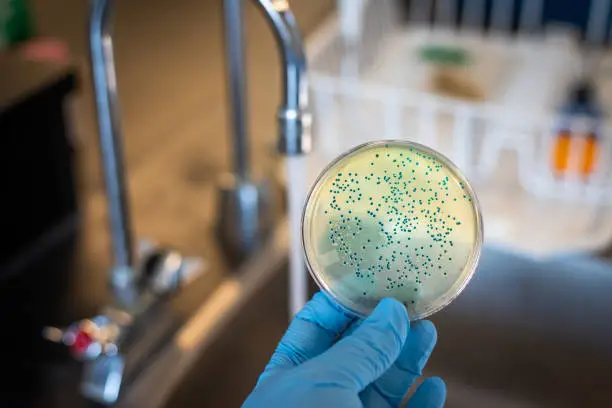
In many real-world cases, microbiological conditions in water are just as important—and sometimes more urgent—than chemical contaminants. That is why bacteria testing remains a core part of any serious water quality evaluation, especially in older buildings, underused plumbing systems, and properties with irregular water use.
Why Bacteria Is Often Overlooked
One reason bacteria testing is not always prioritized is because it is less “visible” in public discussion.
Metal contamination:
- Is widely reported in news and public health conversations
- Has clear historical context in plumbing systems
- Is easy to understand as a physical material in water
Bacteria, on the other hand:
- Cannot be seen without testing
- Often does not change water appearance
- May not produce obvious taste or odor in many cases
- Requires laboratory analysis to confirm
Because of this, many homeowners assume that if water looks normal, microbial safety is not a concern.
That assumption is not always accurate.
What Bacteria Testing Actually Measures
Microbiological water testing typically focuses on indicators such as:
- Coliform bacteria
- E. coli
- Heterotrophic Plate Count (HPC)
Each of these plays a different role in understanding water conditions.
Coliform bacteria
Coliforms are used as indicator organisms. Their presence can suggest that water has been exposed to environmental or system-related contamination pathways.
E. coli
E. coli is more specific and is often associated with more direct contamination concerns. Its detection requires immediate attention and follow-up investigation.
HPC (Heterotrophic Plate Count)
HPC measures general bacterial population levels in water and can help indicate:
- Biofilm presence
- System stagnation
- Organic material buildup in plumbing
Understanding these markers requires proper laboratory context, not just raw numbers.
Why Metals-Only Testing Creates an Incomplete Picture
A water test that focuses only on metals like lead or copper might detect chemical concerns, but it completely ignores biological conditions.
This creates a gap in understanding because:
- Metals and bacteria can coexist in the same system
- One does not explain the presence or absence of the other
- Plumbing conditions can influence both chemical and microbial behavior
For example:
- Corroded pipes may contribute to metal leaching
- Stagnant water in the same system may encourage bacterial growth
- Fixture-level differences may affect both types of results
Without microbiological testing, part of the system remains unexamined.
Why Plumbing Age and Condition Matter
Older plumbing systems are more likely to show variability in both chemical and biological water quality.
In such systems:
- Internal pipe surfaces may support biofilm formation
- Sediment buildup can create microbial environments
- Irregular flow can increase stagnation periods
Even newer systems are not exempt if they are poorly maintained or inconsistently used.
This is why bacteria testing is often especially relevant in:
- Older residential buildings
- Renovated properties with mixed plumbing ages
- Commercial spaces with variable occupancy
Why Underused Spaces Are Higher Risk
One of the most overlooked risk factors for bacterial growth is low water usage.
In underused spaces:
- Water sits in pipes for extended periods
- Chlorine or disinfectant levels may dissipate over time
- Stagnation allows microbial growth conditions to develop
Examples include:
- Vacant apartments or units
- Seasonal properties
- Low-traffic bathrooms or sinks in large buildings
- Storage or secondary facilities
These conditions are not always obvious without testing.
Why Water Use Patterns Change Results
Water quality is not static—it changes based on how a system is used.
Different usage patterns can affect bacteria levels through:
- Flow frequency
- Temperature changes
- Pressure fluctuations
- Periods of stagnation followed by sudden use
This means two fixtures in the same building can show very different microbiological results depending on how often they are used.
Why Visual Inspection Is Not Enough
One of the most common misconceptions is that clear water equals safe water.
However:
- Many bacteria are invisible
- Microbial levels do not always affect taste or odor
- Early-stage biological changes may not alter appearance at all
So while visual inspection can detect some issues, it cannot confirm microbial safety.
Why Biofilm Plays a Hidden Role
Biofilm is a layer of microorganisms that can develop inside plumbing systems over time.
It can:
- Attach to pipe surfaces
- Protect bacteria from removal
- Influence water quality at the tap
- Persist even after short-term flushing
Biofilm is one of the reasons bacterial conditions can reappear even after temporary improvement.
Why Bacteria Testing Complements Chemical Testing
Chemical and microbiological testing are not competing approaches—they are complementary.
Together, they help answer different questions:
- Chemical testing: What substances are in the water?
- Microbiological testing: What biological activity is present in the system?
A complete evaluation considers both.
Why Interpretation Matters for Bacteria Results
Bacteria testing is not just about detection—it is about interpretation.
A result must be understood in terms of:
- Location of sampling
- System conditions
- Frequency of occurrence
- Overall water profile
For example:
- A single positive result may require resampling
- Repeated results may indicate system-level conditions
- Low-level counts may reflect stagnation rather than contamination source
Without context, microbiological data can easily be misunderstood.
Why Bacteria Testing Is Critical in Complex Properties
Certain environments are more likely to benefit from routine bacterial testing:
- Multi-unit residential buildings
- Commercial properties with varied usage
- Schools and institutional facilities
- Older infrastructure systems
In these environments, plumbing networks are large and conditions vary significantly across different points.
Why Water Quality Problems Are Not One-Dimensional
Bacteria is often part of a broader system that may also involve:
- Metals
- Corrosion
- Sediment
- Chemical contaminants
Understanding wider water quality problems helps explain why a single category of testing is rarely enough.
Why Laboratory Structure Improves Reliability
Proper microbiological testing requires controlled procedures, including:
- Sterile sampling methods
- Time-sensitive transport
- Controlled incubation conditions
- Standardized measurement techniques
These are part of structured laboratory services that ensure results are accurate and repeatable.
Why Testing Methods Affect Confidence in Results
Different methods can produce different levels of detail and reliability.
Understanding testing methods helps explain:
- Why results may differ between providers
- How sensitivity is determined
- What counts as a meaningful result
This is especially important for microbiological analysis.
Why Location and System Design Still Matter
Even bacteria testing results must be interpreted based on:
- Plumbing layout
- Building age and design
- Water supply characteristics
- Regional infrastructure conditions
Checking available locations ensures testing is relevant to the system being evaluated.
Why Bacteria Testing Should Not Be Treated as Optional
In many cases, bacteria testing is the only way to detect:
- Biological contamination risks
- System stagnation effects
- Biofilm-related conditions
- Hygiene-related plumbing issues
Excluding it leaves a major part of the system unexamined.
Final Thoughts
Water quality is often discussed in terms of visible or chemically measurable factors, but biological conditions are just as important in understanding overall safety and system behavior.
Bacteria testing provides insight that chemical testing alone cannot offer. It helps identify hidden conditions, system behavior patterns, and potential risks that are not visible at the tap.
A complete water evaluation is not just about metals or chemicals—it is about understanding the entire environment inside the plumbing system.
Because in real water systems, what cannot be seen can still have a significant impact, and microbiological testing is what brings that hidden layer into view.