
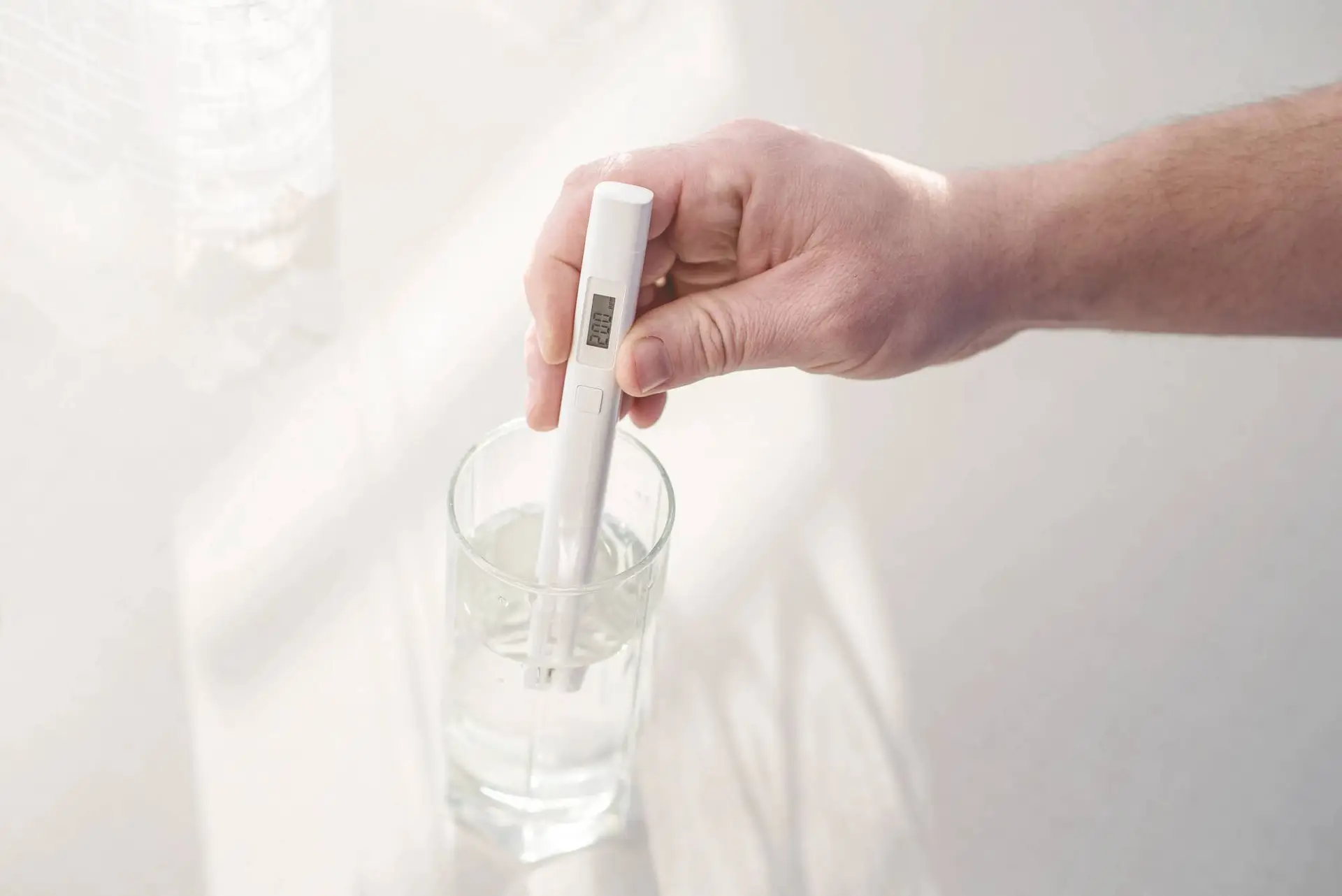
There is something inherently unsettling about a glass of water that leaves a strange, lingering tang on your tongue. We often dismiss a metallic taste as a temporary quirk of the local supply or something that will “clear up” after a few days. However, when your water has a distinct metallic flavor, it is usually a physical signal from your home’s plumbing system telling you that something is actively changing the chemical composition of your water.
Ignoring this symptom is like ignoring a check-engine light in your car. It may continue to run for a while, but the underlying issue is likely getting worse, potentially impacting your family’s health and the longevity of your home’s infrastructure.
The Chemistry of “Metallic”
A metallic taste is almost never a mystery in the world of water chemistry. It is almost always caused by an excess of dissolved metals, most commonly iron, manganese, zinc, or copper.
When you use our laboratory services to investigate this taste, you are essentially asking your water to confess what it has been touching.
- Iron: Often creates a taste that many describe as “rusty” or “bloody.”
- Copper: Has a distinct, biting metallic tang that can become quite strong at levels well below the safety thresholds.
- Zinc: Can lend a more bitter, metallic quality to the water.
These minerals don’t just appear out of thin air; they are almost always leached from the pipes, fittings, or heating elements within your home or the distribution system leading to it.
The Diagnostic Value of the Taste
Think of the metallic flavor as a diagnostic tool. If the taste is present only in the morning, it suggests that the water is sitting in your pipes overnight and leaching metals, which indicates a problem with the corrosivity of your water. If the taste is consistent throughout the day, it may suggest that the metals are present at the source or in the main service line.
When you look at your contaminants tested report, you can begin to match the “flavor profile” to the specific chemical markers. This is why standardized, professional testing methods are so critical. A simple home test kit might tell you that you have “some iron,” but a professional lab can tell you the exact concentration, the pH of your water, and whether your water is chemically aggressive enough to continue eating through your plumbing.
More Than Just a Taste
While the taste itself is unpleasant—it can ruin the flavor of your coffee, tea, and home-cooked meals—the health and infrastructure implications are far more serious.
- Plumbing Degradation: If your water is “hungry” enough to dissolve metal from your pipes, it is also “hungry” enough to eventually cause leaks, pinhole failures, and damaged joints.
- Appliance Damage: High concentrations of these minerals will build up in your water heater, ruin the efficiency of your dishwasher, and cause ugly, permanent staining on your sinks and porcelain fixtures.
- Chronic Health Impacts: While small amounts of some minerals are essential, chronic ingestion of high levels of certain metals—like copper—can lead to gastrointestinal distress and, over time, place stress on your kidneys and liver.
How to Investigate
When a metallic taste becomes noticeable, the best course of action is to gather as much context as possible. Our FAQ section provides guidance on how to perform a “first-draw” versus “flushed” test to see if the issue is internal or external.
Because we understand the locations we serve, we can provide further context. Is there a history of pipe corrosion in your specific neighborhood? Is the local municipal water known for being naturally acidic? This regional knowledge, combined with your specific test results, allows us to help you determine if you need a simple point-of-use filter or if you should be discussing a larger-scale treatment system with a plumber.
Taking Control
You don’t have to settle for water that tastes like a penny. By identifying the specific metal and the root cause, you can stop the corrosion, protect your pipes, and restore the natural, clean taste of your water.
If you are ready to get to the bottom of that metallic tang, visit our contact page. We can walk you through the process of getting a sample to our lab, providing you with the clear, actionable data you need to ensure that what you are drinking is truly clean.
Water quality is complex, but it shouldn’t be a mystery. Explore our blog for more insights into common water quality issues and how you can maintain a high-quality supply in your own home.
If you have noticed a metallic taste in your water, does it tend to be more pronounced when you use hot water, or is it equally noticeable with cold?